UX / PROTOTYPING
Farfetch Back Office
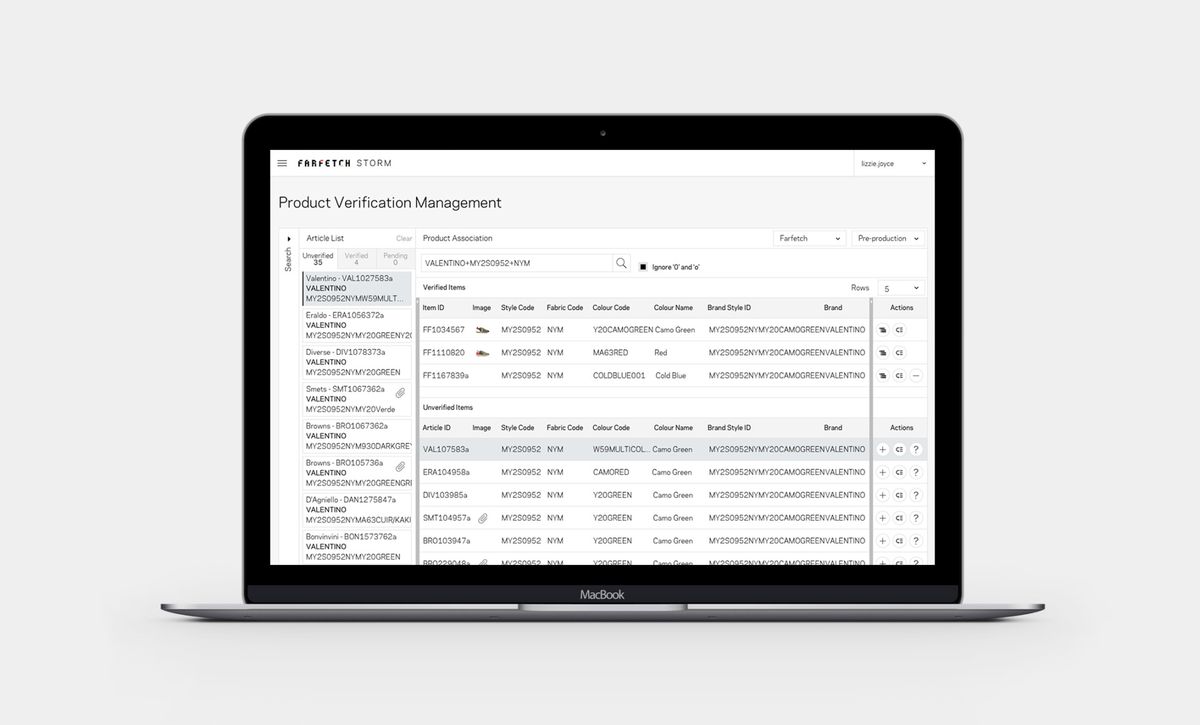
A product design contract embedded within Farfetch's Back Office team — designing internal tooling used by boutique managers and operations staff across the world. Unlike consumer-facing work, this meant deeply understanding complex business processes and designing interfaces that made highly manual, high-volume workflows faster, more accurate, and easier to use. Three distinct projects were tackled across shipping, barcode management, and inventory duplication detection.
Embedded product designer, internal tooling
Brought in as an external consultant working directly within the Back Office product team at Farfetch. The role covered UX, UI, and prototyping across three separate internal tools — from initial discovery and documentation through to screen designs ready for development.
Working closely with internal stakeholders and colleagues, the role also involved real-time ideation and blockframe prototyping during meetings and reviews.
Challenge
Shipping management
Solution
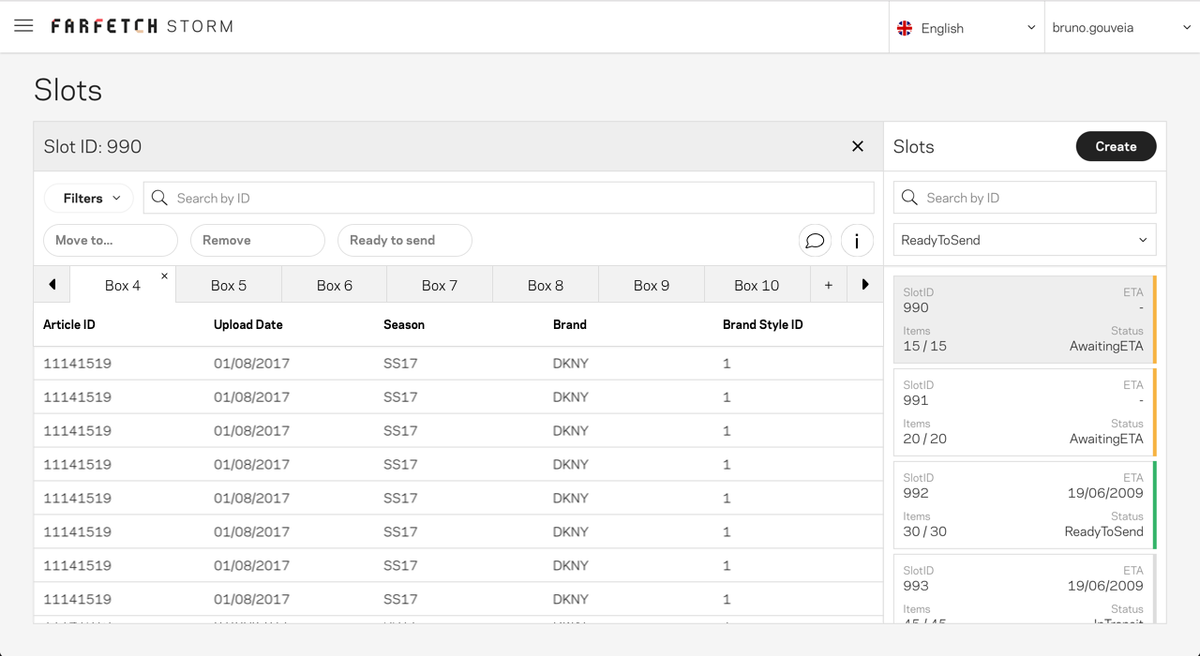
The shipping tool required a deep understanding of Farfetch's established internal procedures and the various business areas interacting through it. The solution was a carefully considered interface that matched the precision of their existing processes while removing unnecessary friction for the small number of specialist users relying on it daily.
Challenge
Barcode creation and management
Solution
Boutique managers worldwide were stuck in a painfully manual process — uploading dozens or hundreds of products at a time with no efficient workflow in place. The solution streamlined the entire barcode creation and management process, reducing repetitive steps and making bulk uploads significantly faster and easier to manage.
Challenge
Inventory duplicate detection
Solution
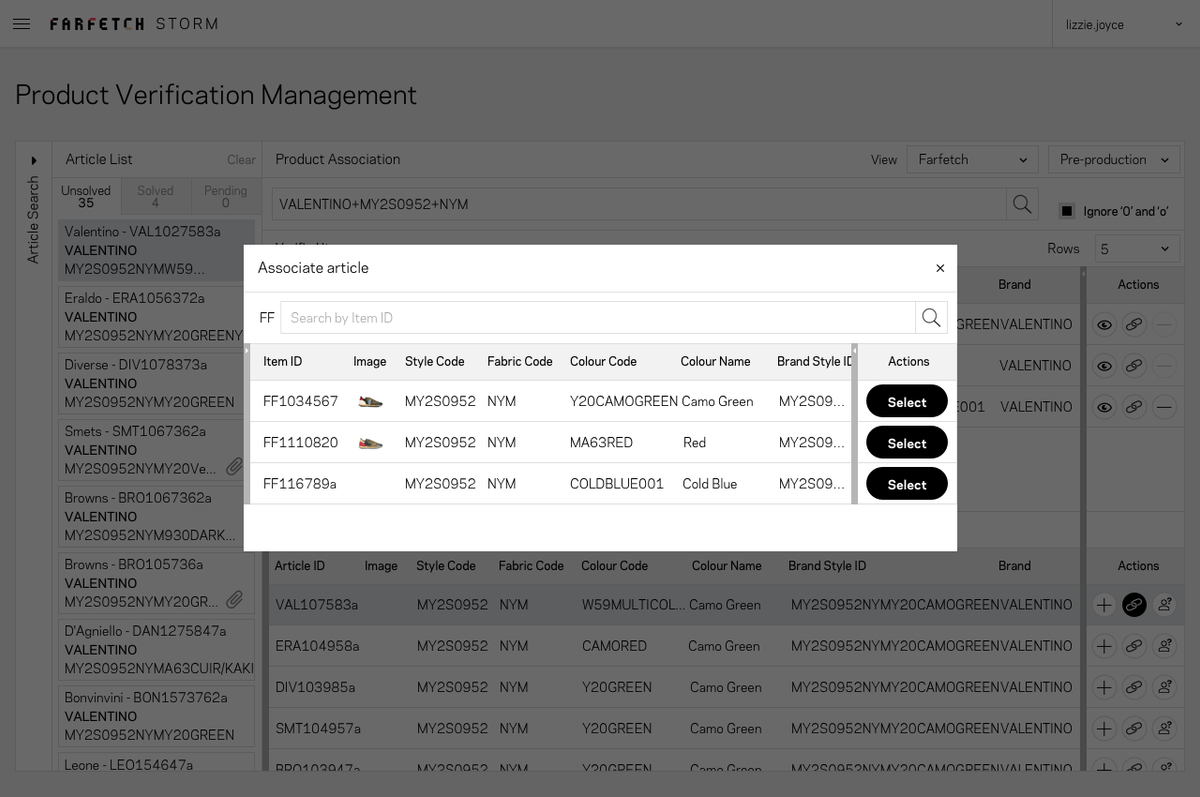
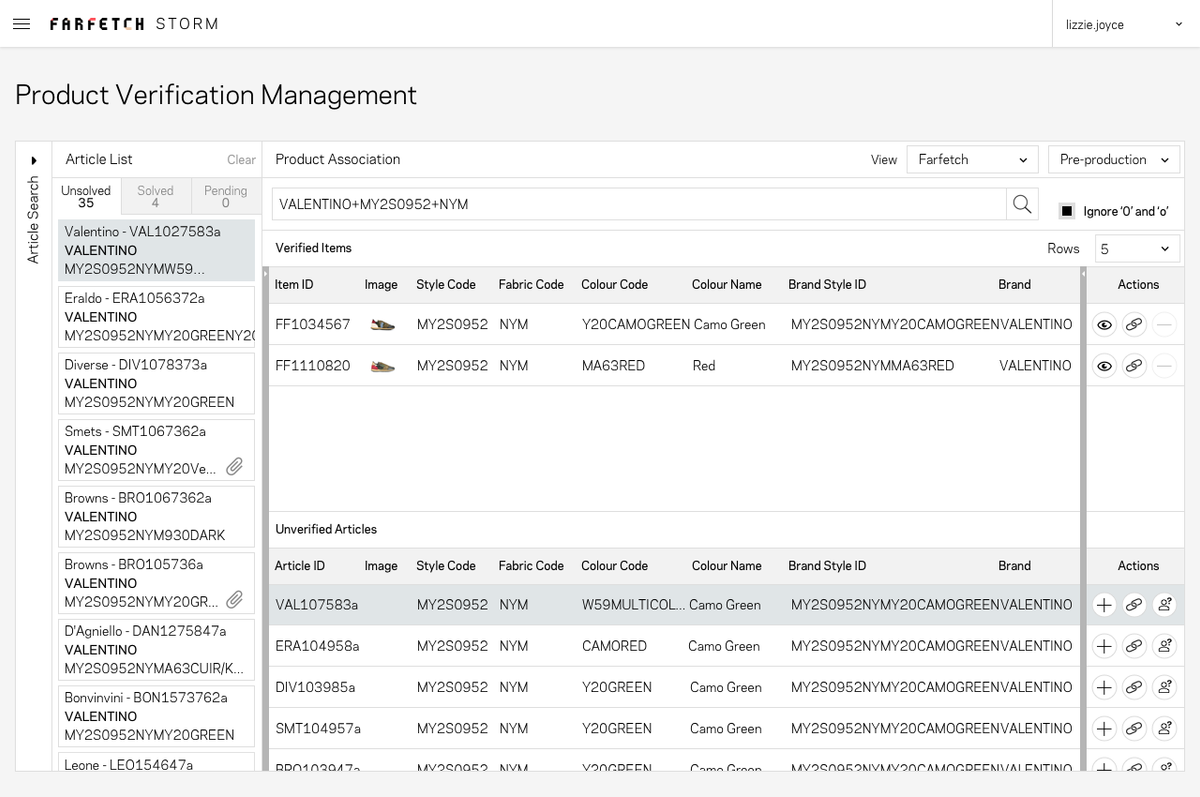
When boutiques uploaded products, duplicates already in the system could slip through — creating wasted work across multiple teams. A visual comparison tool was designed to surface potential duplicates early in the upload process, giving users clear, simple controls to resolve or remove them before they reached production.
Embedded, fast, and always in the room

Axure
Prototyping and interactive UX documentation

Principle
Fast blockframe prototyping for real-time ideation

UX Documentation
Detailed flows and screen designs prepared for internal handover
Working directly within Farfetch's Back Office team meant the process was as much about collaboration as it was about design. Each project started with a deep dive into the specific business workflow — understanding who was using the tool, how the existing process worked, and where the friction was.
From there, ideas moved quickly into blockframing: rapid clickable prototypes built in minutes using Principle during meetings and reviews, so discussions never stayed abstract for long. UX documentation and screen designs were produced in parallel, ensuring the internal team had everything they needed to keep building once the contract ended.
Three tools delivered, one team left running\nAs an external consultant, the engagement ended with full UX documentation and UI designs handed over across all three projects — giving the internal team everything needed to continue building without losing momentum.
3
Internal tools designed
1
Research trip into their production line
10+
New micro-interactions
2
Old excell sheets turned into a dedicated tool
Like what you see?
Let’s get involved in your next great project, drop me a line below.
Or scroll down to continue reading more details about this project.
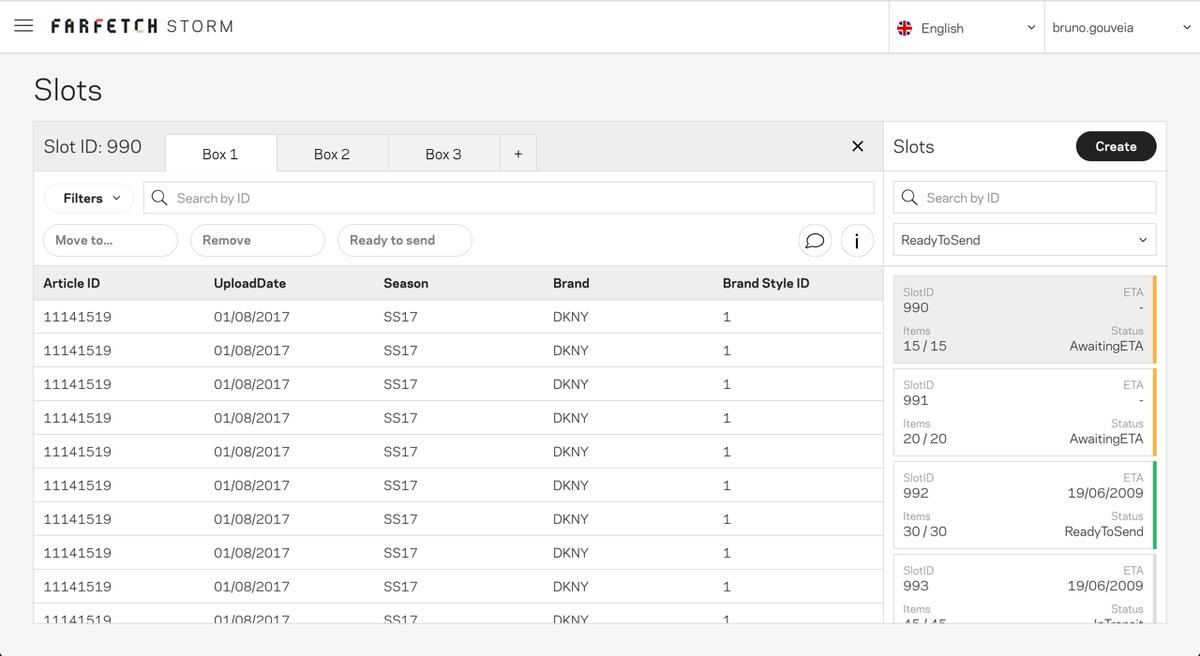
Shipping
Working in the back office means designing interfaces that may be only used by a handful of people, opposite to what a consumer facing software may be.
That required a strong understanding and knowledge of the different parts of the business that would be interacting through this app, as Farfetch has a very stablished procedure, we needed to find the perfect solution for each specific process.
Barcodes
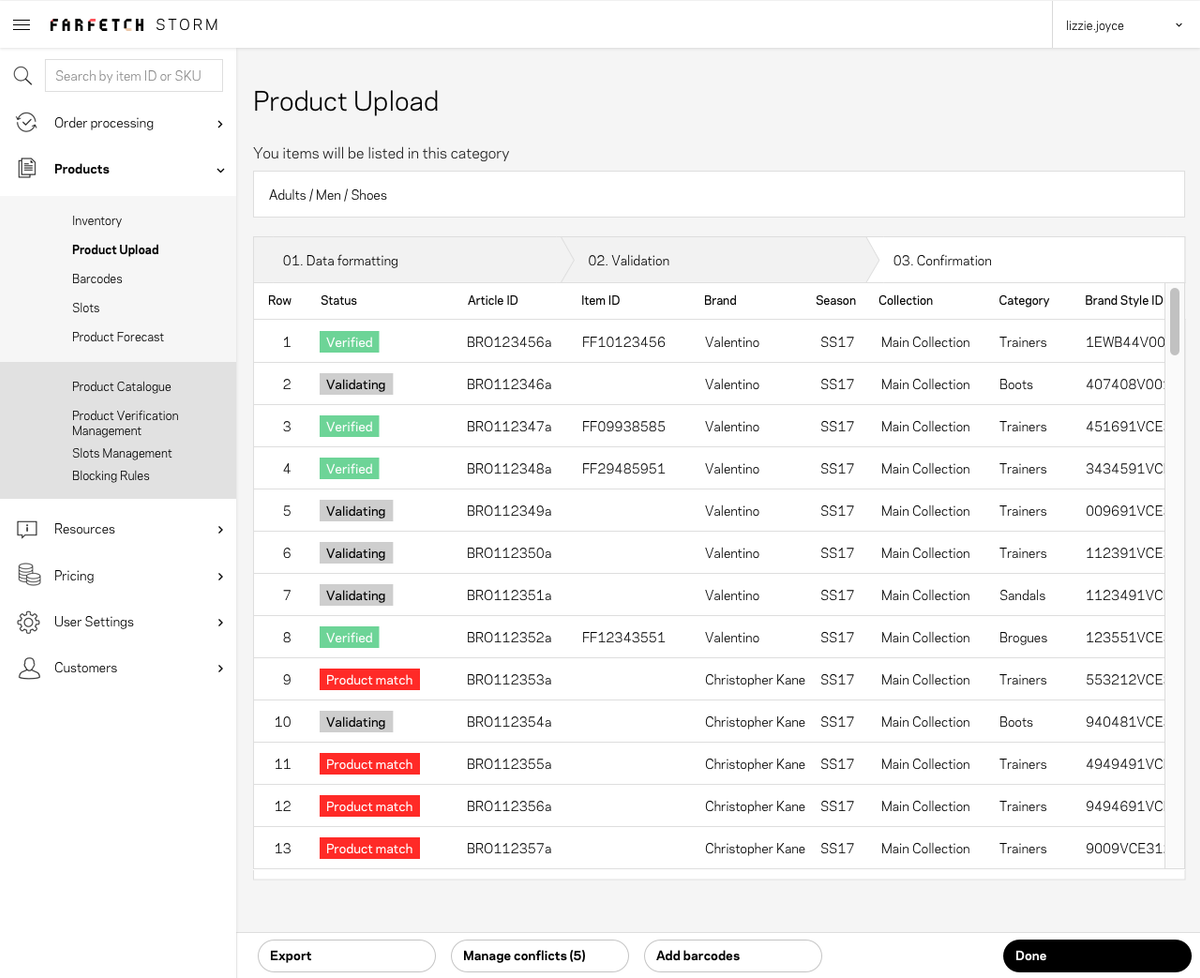
This project goal was to design the different sections in charge of the creation and management of barcodes for the different products, this task is made by the different boutique managers across the world.
One of the biggest issues with the existing platform is that is was a very manual and tedious process as it involves uploading dozens or even hundreds or products at the same time, so the solution should streamline that process and make it more efficient and easy to use.
Inventory duplicates
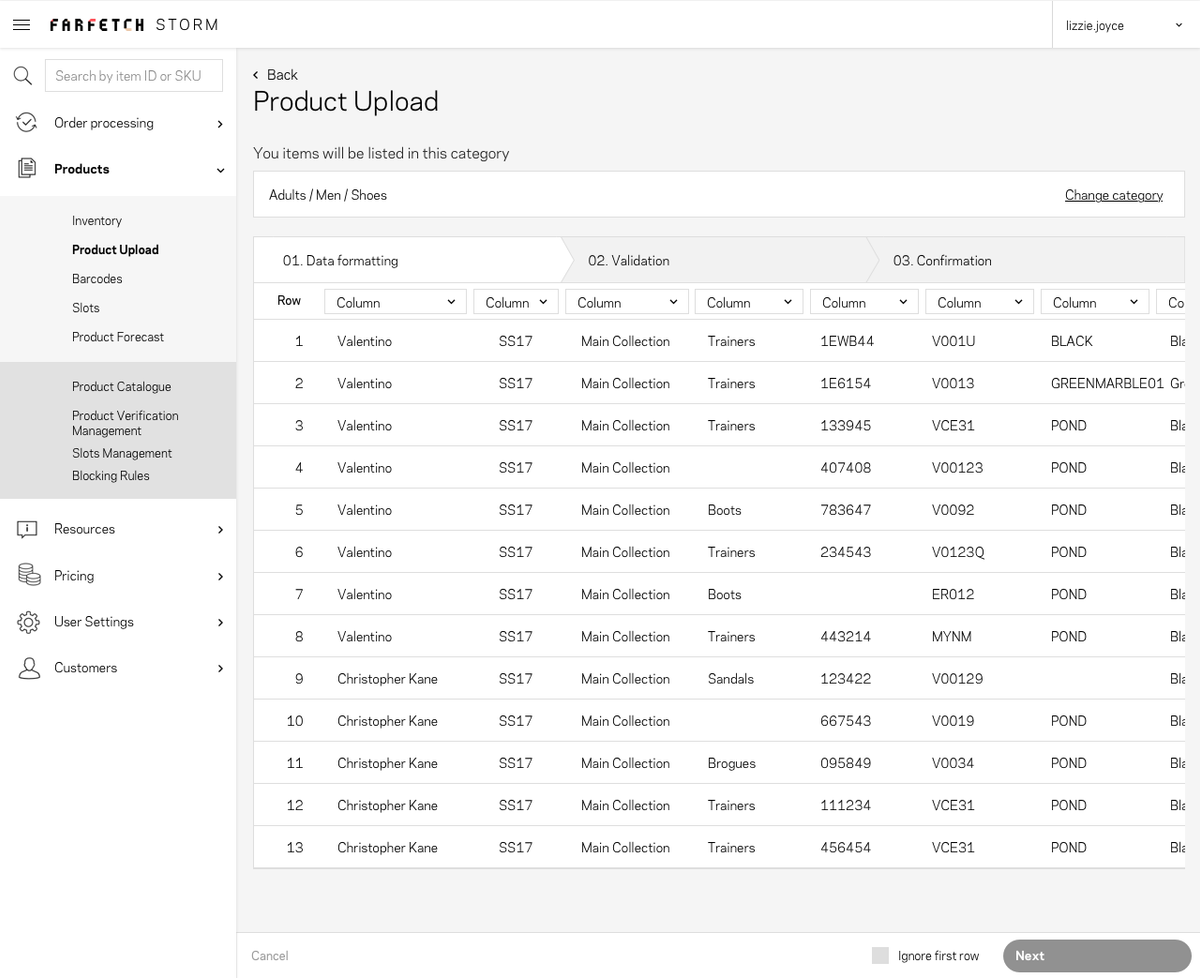
In ocassions, when a boutique upload their products, there may be the chance that one or more of those products may exist already in the system, as they could have been uploaded and sent to production by another boutique.
This case is very important as sending an item to production that is already in the system means duplication of work for many people, so detecting these items early enough in the upload process was vital.